

 About
 Links
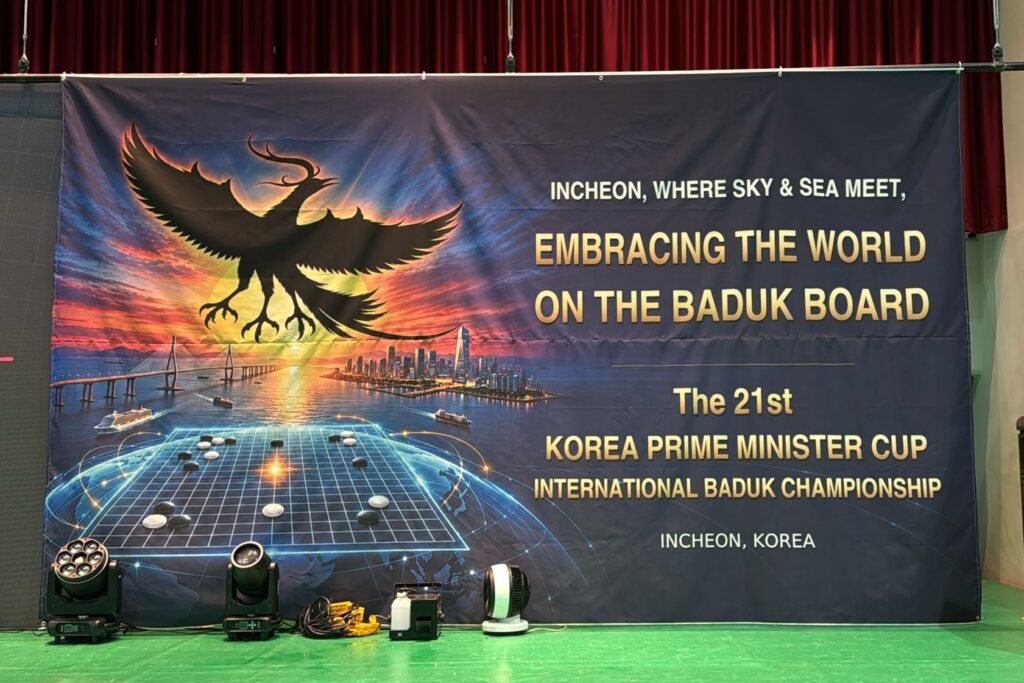
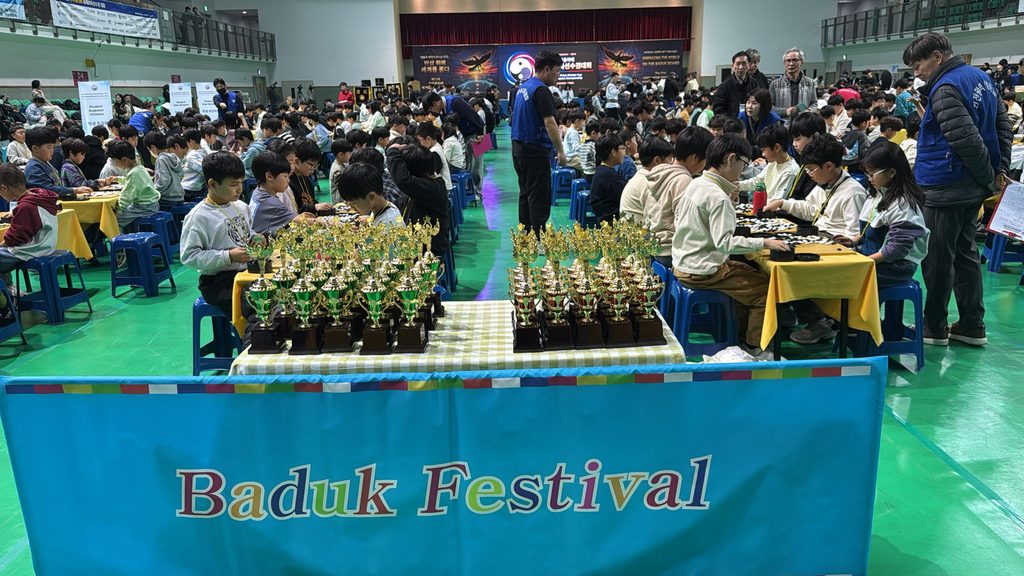
The 21th Korea Prime Minister Cup is being held in Incheon. The opening ceremony was spectacular, attended by many KBF and KBA officials and high representatives of local government, with Lee Chang-ho, 9p, as a special guest. It started with martial arts, gymnastic dancing, traditional drums along with a huge national go tournaments having groups from pre-school, then each class of elementary school with special part for 40+ players. There are 49 players in the main tournament, a little bit less than last year. For the second time, the KPMC is including a special “Youth Division” with 24 players who are 15 or younger. Based on experiences from European Go Congress, a lot of additional activities are introduced: “pairgo” (not necessarily a mixed pair), game reviews, simultaneous games with professional players, organized excursions.
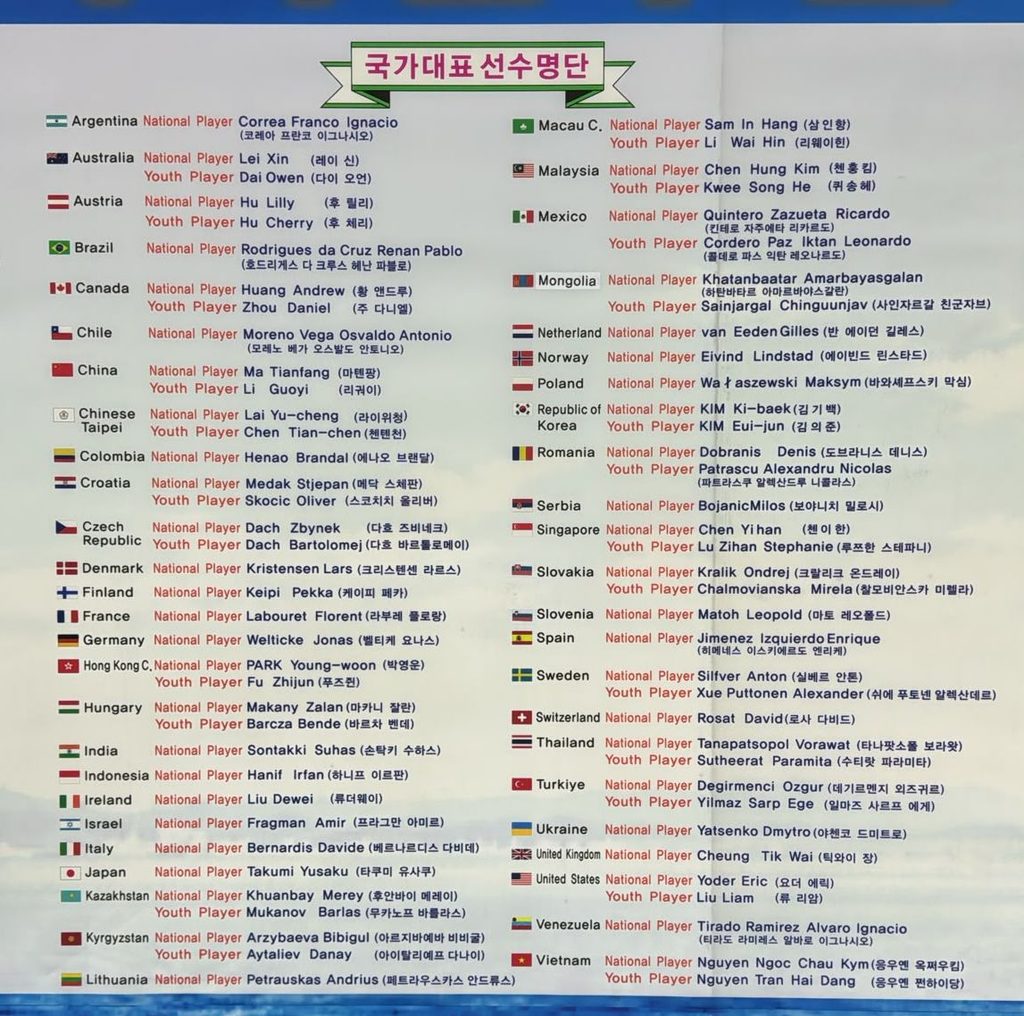
Note: current standings of the “KPMC national division” or “KPMC youth division” are regularly updated by Krzysztof Bożek, who did a marvelous job organizing most European and World go tournaments in a searchable database.
The 21st Korea Prime Minister Cup (KPMC) is an international tournament organized by the Korean Baduk Federation (KBF), Korean Baduk Association (KBA) and the Incheon Baduk Association, in cooperation with the Asian Go Federation (AGF) and the European Go Federation (EGF). It was usually held at the end of September, but this year it moved again a bit into an even nicer part of autumn. As usual, all participants, officials and guests arrived one day earlier, on 6th November 2026, at Incheon Airport. Organizers prepared shuttle buses from the airport to the Charis hotel in Incheon. The registration was very smooth with badges, traditional KPMC bags with nice presents for everyone and uniforms with flags for all players. Since the tournament was played in the same hotel, the only drive was to the Gymnasium sport hall where the opening ceremony was held. This time, all players entered the hall in Olympic style wearing either KPMC uniforms or their national costumes, holding nice national flags with golden edges. After encouraging speeches and a group photo of officials, players participated in two rounds of pairgo, while hundreds of go fans formed a queue to get a fan or postcard signed by Lee Chang-ho, 9p.
The orientation meeting was held in a special room. Referees (Korean professional players) introduced participants with rules of the tournament, repeating a very good Korean rule that a stone is staying on the first intersection it touches (no sliding or retracting). The time setting was the same as in 2025: 40/20 Fischer time. Rounds are starting at 10:00 and 15:00, with all players advised to come 10 minutes earlier to make nigiri. An important change about the pairing system was properly announced: Swiss system with cut and slide from the round one. Players were ordered by rank. As usual, most questions were related to stopping the clock in case of a toilet break. The announcement of “one time per game” has been refined to “and at most five minutes”. In case a player is leaving the playing area without stopping the clock, he must inform the referee.
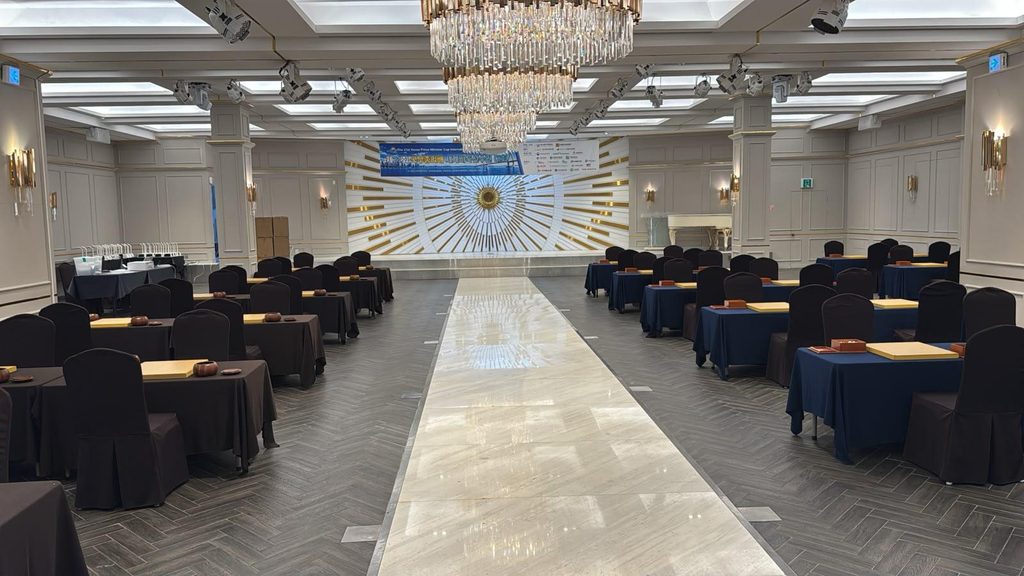
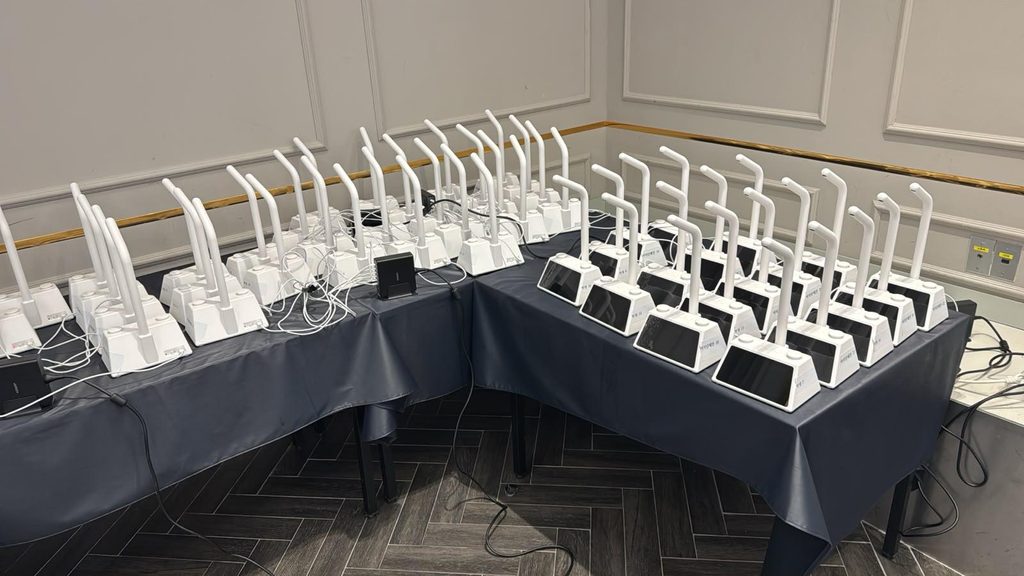
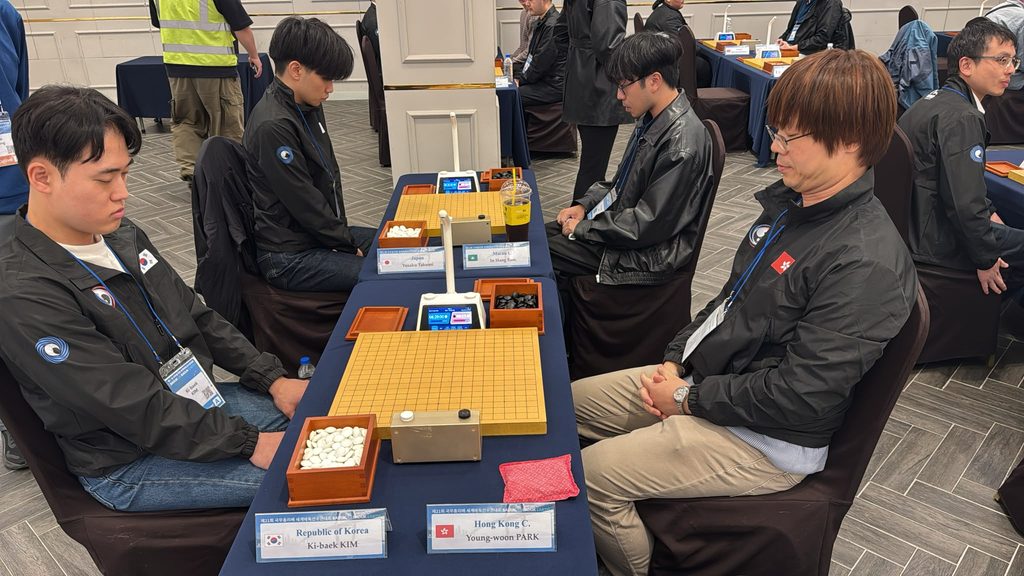
The playing hall in the Charis hotel was perfect for comfortable seating both the national division and the youth division. Excellent lighting, go equipment of great quality, with Korean talking clocks (the new version supports Fischer time). Just like in WAGC 2026, each board had a special device with the camera for live-recording of all moves. Everything was ready in time, with last announcements at 9:50, and then, at 10:00 after most players made nigiri, it became clear that pairings were merely random. Nonetheless, in about 20 minutes everything was just fine: cut and slide applied, new pairings, new nigiri and games started. Naturally, “nigiri in all games” made a lot of trouble for fixing colors in games where players had to exchange seats – a good lesson for future events.
The first round in the national division brought no surprises, while Danay Aytaliev, 1d from Kyrgyzstan, won against Li Wai Hin, 6d from Macao. The second round had a bit more interesting games, with many European players going to 2/2: Denis Dobranis, Davide Bernardis, Jonas Welticke, Dmytro Yatsenko, and Florent Labouret. However, the third round left favorites on top: Ma Tianfang (China), Kim Kibaek (Korea), Takumi Yusaku (Japan), Lai Yu-Cheng (Chinese Taipei), Park Youngwoon (Honk Kong China) and Sam In-Hang (Macao China) prepared the showdown in Round 4 before the free day.
Korea, Japan and China remained undefeated, whereas a large pack of 13 players with 3 points is fighting for top positions. European representatives Tik Wai Cheung, Gilles van Eeden, Ozgur Degirmenci and Stjepan Medak are all playing on top 8 boards on Wednesday morning.
The picture in the Junior division is more clear after 4 rounds: China on top, with a group of 7 players with only one loss: Chinese Taipei, Canada (!), U.S., Korea, Hong Kong and two European 5d players: Bartik Dach, Czechia, and Barcza Bende, Hungary, facing challenges in Round 5 tomorrow.
Today (Tuesday), organizers prepared a lovely excursion to Ganghwa Island for all players, officials and accompanying persons. We enjoyed handcraft of traditional flowered-patterned rush mats (wanggol). After visiting a famous megalithic dolmen site (with a 100 tons of granite resting on two supporting stone-walls), we stopped by the oldest Buddhist temple in Korea, funded in 381 AD. The day was concluded with a party in the banquet hall at the 13th floor of the Charis Hotel.
This is a flash report, to be upgraded tomorrow before the last round.